Friday, June 13, 2008

FAREWELL DEAR FRIEND !


Tim Russert Dead At 58

This blog is and will continue to be dedicated to the needs of Veterans. However, Today I felt that we should offer a few words in memorandum to an honest, courageous champion of the "common man", as well as a patriot and fighter of & for the rights of those who had no voice... including the Veteran.

by Poliwonk USA
June 13, 2008 04:37 PM EDT

Whether you agreed with him or not, it will be hard not to remember Tim Russert. Today in the middle of recording a segment in the job he loved the most. Russert was in what is known as a tracking booth, recording voice-overs for the upcoming show, and started having problems breathing. He apparently collapsed and an ambulance was called.

He was unconscious as he left and never revived. He was the longest host of Meet The Press, but more importantly he was a beloved father and husband. He touched every network, and caused them all to be better. This is noted that every network ran coverage of his death. (CNN, MSNBC,CNBC, Fox News, ABC, CBS) Tom Brokaw came out of retirement to break the news. You could visibly notice Brokaw choking back tears and trying not to cry while reading the announcement.

Russert grew up in Buffalo, which Brokaw said Russert had just visited last week to assist in moving his father to a new home. Russert had hosted "Meet the Press" since 1991, taking the seat from Garrick Utley. Russert also authored two best-sellers, including "Big Russ and Me," which focused on the relationship with his father, and the "Wisdom of Our Fathers." Russert honed his hard-hitting interviewing style over the years, and became a make-or-break appearance for any major American politician, as well as must-see television for political observers, in and outside government.

He regularly interviewed the biggest names in domestic and international politics, and moderated presidential debates, including at least three during the 2008 presidential campaign cycle.

Russert, who also was an attorney and a former aide to New York former Sen. Daniel Patrick Moynihan, D-N.Y., and Gov. Mario Cuomo (D), had a distinctive on-air style that included posting well-documented quotes and charts on air. During the 2000 election, Russert received light ribbing for repeated references to a white dry-erase board he continued to write on while explaining the ongoing tallies.

Our condolences and prayers to the family, and our thanks in knowing that he is at rest in heaven.

He will be greatly missed by both sides of the isle. The World has lost one of its brightest lights.

The toll-free Veterans Affairs Department Suicide hotline number is 1-800-273-TALK (8255). Veterans Affairs Department: http://www.va.gov/ Iraq and Afghanistan Veterans of America: http://www.iava.org/ ------------------------------------------------> Flashback, Posttraumatic Stress Disorder, Suicide, and the Lessons of WAR-- by Penny Coleman and---> I Can Still Hear Thier Cries, Even In My Sleep ... A Journey Into PTSD --By E. Everett McFall Both Books are Available on Amazon.com

Saturday, June 7, 2008

GOOGLE Blogs Alert for: ptsd

Blogs Alert for: ptsd
Senate probes VA on PTSD
Daniel Akaka's accusations of “systemic indifference to
invisible wounds” in its handling of disability claims for PTSD.
During Senate committee hearings, Dr. Norma Perez, Central
Texas Veterans Health Care System, was persistently

...MIWatch.org - http://www.miwatch.org/
PTSD and self harm behaviorsBy Rachael O.(Rachael O.) http://ptsd.about.com/od/relatedconditions/a/DSHandPTSD.htm.

On gangstalking - http://ongangstalking.blogspot.com/
CONFIDENTIAL // PTSD "PTSD Research"By TVV1 Currently,
PTSD is understood as a condition affecting hundreds of thousands
of American men and women. Combat exposure, sexual assault,
abuse, accidents and natural disasters are a few of the events that
can trigger PTSD.

The Veterans' Voice -
http://thenma.org/blogs/index.php/theveteransvoice
VA Lawsuit: Judge orders hearing on internal PTSD email
By Iraq Veteran Project
The plaintiffs asked Conti to reopen the case in light of the e-mail
discovered after the trial ended. The judge agreed, saying
"the e-mail raises potentially serious questions that may warrant
further attention."
Swords to Plowshares - http://swords-to-plowshares.org

Support Groups for PTSD Survivors Can Help - Wellness Coach
By Darlene Siddons
Trauma of any kind has a long lasting effect on individuals and it
is important that PTSD (Post Trauma Stress Disorder) survivors
know that there is help and to be ok with asking for help.
Shame plays a large role in PTSD and many
...- http://www.spiritedboutique.com

Judge to consider VA e-mail about PTSD diagnoses
The plaintiffs asked Conti to reopen the case in light of the e-mail
discovered after the trial ended.Digg / upcoming - http://digg.com/

VA e-mail on PTSD catches court attention
By thedrifter
“Given that we are having more and more compensation-seeking
veterans, I’d like to suggest that you refrain from giving a diagnosis
of PTSD straight out,” Perez wrote to VA counselors. “We really don’t
or have time to do the extensive
...Marine Corps Community for USMC Veterans -
http://www.leatherneck.com/forums

VETERANS ADMINISTRATION CHIEF LIKENS PTSD TO
"HIGH SCHOOL FOOTBALL ...By Bill Corcoran(Bill Corcoran)
When I interviewed Josh about his difficulties seeking help for
his PTSD, he recounted the whole horrific process with a smile
on his face and a self-effacing laugh. It took me a while to realize
that Josh laughed about his troubles
...CORKSPHERE - http://corksphere.blogspot.com/

VA Official Testifies on PTSD Stance in Latest Email Flap http://feeds.wsjonline.com/wsj/health/feed
in veterans got a chance to explain herself to Congress yesterday.
“Several veterans expressed to my staff their frustration after
receiving a diagnosis of PTSD from a team member … when they
had not received that diagnosis during
MyDailyApple News Alert: Personal-
http://www.mydailyapple.com/news

Fellow Friend & Forum Member in Hospital
By goingonhope
I imagine he, like myself recognize that we are not the only two
PTSD sufferers, who suffer alcoholism simultaneous with PTSD.
And, I'm not speaking of suffering the drink, I'm referring to
accepting and living with the three-fold
...PTSD Forum - http://www.ptsdforum.org
--------------------------------------------------------
For more information:
The toll-free Veterans Affairs Department Suicide hotline number is
1-800-273-TALK (8255).
Veterans Affairs Department: http://www.va.gov/
Iraq and Afghanistan Veterans of America: http://www.iava.org/
------------------------------------------------>
Flashback, Posttraumatic Stress Disorder, Suicide,
and the Lessons of WAR by Penny Coleman
and---> I Can Still Hear Thier Cries, Even In My Sleep
.. A Journey Into PTSD By E. Everett McFall

Both Books are Available on Amazon.com

Tuesday, June 3, 2008

Nearby Firing Ranges Complicate Soldiers' Recovery From Stress

Our Thanks to:
Walker Bennett, SF Author
June 03, 2008 03:54 PM EDT

"A loud noise still makes me dive for cover 36 years later. When I
lived in Louisville, Ft. Knox was 40 miles away. When they had
tank target practice, I'd spend a lot of time under the table."

http://www.washingtonpost.com/wp-dyn/content/video/2008/05/30/VI2008053002640.html?sid=ST2008060203019

By Ann Scott Tyson
W ashington Post Staff Writer
Tuesday, June 3, 2008; Page A01

Wounded Soldiers Housed Next to Firing Range
More than 170 soldiers with physical and mental wounds such as
post-traumatic stress disorder are housed across the street from
a string of firing ranges at Fort Benning, Ga., one of the Army's main
training bases. Several soldiers with PTSD said the loud gunfire at
day and night startles them and keeps them on edge and wake,
harming their recovery.

FORT BENNING, Ga. -- Army Sgt. Jonathan Strickland sits in his
room at noon with the blinds drawn, seeking the sleep that has
eluded him since he was knocked out by the blast of a Baghdad car
bomb.

Like many of the wounded soldiers living in the newly built "warrior
transition" barracks here, the soft-spoken 25-year-old suffers from
post-traumatic stress disorder. But even as Strickland and his
comrades struggle with nightmares, anxiety and flashbacks from
their wartime experiences, the sounds of gunfire have followed them
here, just outside their windows.

Across the street from their assigned housing, about 200 yards
away, are some of the Army infantry's main firing ranges, and
day and night, several days each week, barrages from rifles and
machine guns echo around Strickland's building. The noise makes
the wounded cringe, startle in their formations, and stay awake
and on edge, according to several soldiers interviewed at the
barracks last month. The gunfire recently sent one soldier to the
emergency room with an anxiety attack, they said.

"You hear a lot of shots, it puts you in a defensive mode," said
Strickland, who spent a year with an infantry platoon in Baghdad
and has since received a diagnosis of PTSD from the military. He
now takes medicine for anxiety and insomnia. "My heart
starts racing and I get all excited and irritable," he said, adding
that the adrenaline surge "puts me back in that mind frame that I
am actually there."

"Fort Benning is a training unit, so there is gunfire around us all
the time," said Elaine Kelley, a behavioral health supervisor at the
base hospital. If a soldier had a severe problem, it would have
been identified, she said.

Lt. Col. Sean Mulcahey, who recently took command of the
Warrior Transition Battalion, where wounded soldiers are
assigned, said: "No soldier has talked with me about the ranges."
If it is an issue, "we will address it," he said, stressing that the
battalion's mission is " getting those soldiers to heal."

Under Army rules, commanders of warrior transition units are
supposed to enforce "quiet hours." Officials said the location of the
barracks for wounded soldiers, along with a $1.2 million Soldier and
Family Assistance Center, was chosen for its proximity to central
facilities such as the hospital. About 350 soldiers are assigned to the
battalion--including 176 who live in the barracks near the ranges--
where they stay an average of eight months, Mulcahey said. An
estimated 10 to 15 percent of the soldiers have PTSD, he said.

Soldiers interviewed said complaints to medical personnel at
Fort Benning's Martin Army Community Hospital and officers in
their chain of command have brought no relief, prompting one
soldier's father to contact The Washington Post. Fort Benning
officials said that they were unaware of specific complaints but that
decisions about housing and treatment for soldiers with PTSD
depend on the severity of each case. They said day and night
training must continue as new soldiers arrive and the Army grows.

The soldiers are part of a growing group of an estimated 150,000
combat veterans of the wars in Iraq and Afghanistan who have
PTSD symptoms. The mental disorder has been diagnosed in
nearly 40,000 of them.

PTSD symptoms include flashbacks and anxiety, and noises such as
fireworks or a car backfiring can make sufferers feel as though they
are back in combat. Health experts say that housing soldiers near a
firing range subjects them to a continual trigger for PTSD.

"It would definitely traumatize them," said Harold McRae, a
psychotherapist in Columbus, Ga., who counsels dozens of soldiers
with PTSD who are at Fort Benning. "It would be like you having
a major car wreck on the interstate" and then living in a home
overlooking the freeway, he said. "Every time you hear a wreck
or the brakes lock up, you are traumatized."

Fort Benning, which covers more than 180,000 acres, is one of
the Army's main training bases, with 67 live-fire ranges. The base
has thousands of housing and barracks units. "There is no excuse"
for the housing situation, said Paul Ragan, an associate professor
of psychology at Vanderbilt University, who treats veterans with
PTSD. "Charitably put, it's very untherapeutic."

CONTINUED Next >

For more information
The toll-free Veterans Affairs Department Suicide hotline number
is 1-800-273-TALK (8255).
Veterans Affairs Department: http://www.va.gov/
Iraq and Afghanistan Veterans of America: http://www.iava.org/
------------------------------------------------>
Flashback, Posttraumatic Stress Disorder, Suicide,
and the Lessons of WAR-- by Penny Coleman
and---> I Can Still Hear Thier Cries, Even In My Sleep
... A Journey Into PTSD --By E. Everett McFall
Both Books are Available on Amazon.com

Monday, June 2, 2008

Post-war Trauma Cases Up !!!

Post-war Trauma Cases Up
Inadequate care blamed for suicide spike...
By William Johnson • wjohnson@dailyworld.com • June 2, 2008

Read Comments(3) E-mail this article
Del.icio.us , Facebook , Digg , Reddit , Newsvine

Last week's Opelousas Memorial Day observance paid special
tribute to Sgt. Joseph Ronald Barnaba II, who was severely injured
in Iraq and was found dead at his home in St. Landry Parish two
weeks ago.

His first cousin, Dexter Scott Freeman, said it may have been
terrorists who attacked him, but it was a lack of adequate
care at home that killed him.

"The insurgents didn't kill him. Our government killed him. Everbody
wants to wave the flag but the truth is so much more. These guys are
coming home with so much pain, many have lost their jobs, their homes.

They are in so much pain most people can't fathom it," Freeman said.
While critical of the treatment his cousin received, Freeman is
no critic of the military. Freeman, a 10-year military veteran,
said he and Barnaba grew up in the same house - a house with
a strong military tradition. Freeman's brother is still in the
National Guard, and other family members serve in the Marines
and Air Force.

According to Freeman, his cousin was suffering from post-
traumatic stress disorder. Local mental health care
professional Paula Carriere said Barnaba was not alone. She said
she is seeing many veterans who are having trouble adjusting.
"One in eight is suffering from post-traumatic stress syndrome.
It is affecting not just them but their families," Carriere told the
Opelousas Noon Rotary Club last week.

(This Vietnam Veteran, strongly believes it's
closer to Six in Eight- that are suffering with
PTSD!)

"A lot aren't getting the mental health counseling they need. They
are dealing with a lot anger, feeling out of control, they are impatient,
constantly on guard," Carriere said. "They have a tremendous set of
issues." In a report released this month, the military said newly
diagnosed cases of PSTD among U.S. troops sent to Iraq and
Afghanistan surged 46.4 percent in 2007.

The numbers are especially troubling concerning the National Guard.
While Guard and Reserve troops make up less than a third of soldiers
serving in the war, they make up more than half of veterans who
commit suicide after returning home.

Officially, the military only acknowledges about 40,000 PTSD cases.
A recent study by the RAND Corporation, a military think tank, called
that number low. It estimates about 300,000 troops, or 18.5 percent,
of the more than 1.5 million troops sent into the war zones exhibit
symptoms of either PTSD or depression.

The government is trying to correct the problem. In November,
President Bush signed a suicide prevention bill, which directed the VA
to improve its mental health training for staff and do a better job of
screening and treating veterans.

As a result, the VA has started its own suicide hotline. The VA and
the military have also made other improvements in suicide
prevention care, such as hiring more counselors and increasing
mental health screening. Despite these efforts, soldiers, veterans
and their families are running into what veterans advocates deem
excessive red tape and roadblocks when they try to use their
military insurance.

The deployment of hundreds of doctors and therapists to Iraq and
Afghanistan and the shortage of military health care providers has
forced patients at veteran's clinics and hospitals to wait months for
appointments - longer if they need to see a specialist.

Meanwhile, civilian doctors and psychiatrists say they're often faced
with tough decisions about whether to turn away patients on Tricare,
the Defense Department program that insures 9.2 million current
and former service members and their dependents. Its
reimbursement rates are low and its claims process cumbersome.

The problem is expected to only get worse. Tricare's reimbursement
rate are linked to Medicare levels. Health care providers who treat
patients on both programs will take a 10 percent pay cut on July 1
and a second, 5 percent, pay cut on Jan. 1, 2009.

In the meantime, Freeman urges family members of veterans to
surround their loved ones with support.

"To those of you who do have family members serving, please make
sure you can surround that individual with the help he or she she
needs because, I have to be frank, this story is going to repeat itself
again and again," Freeman said.

For more information
The toll-free Veterans Affairs Department Suicide hotline number is

1-800-273-TALK (8255).
Veterans Affairs Department: va.gov
Iraq and Afghanistan Veterans of America: iava.org
------------------------------------------------>
Flashback, Posttraumatic Stress Disorder, Suicide,
and the Lessons of WAR by Penny Coleman
and---> I Can Still Hear Thier Cries, Even In My Sleep
... A Journey Into PTSD By E. Everett McFall
Both Books are Available on Amazon.com

Monday, May 19, 2008

Combat PTSD or Adjustment Disorder? Saving Money, Not Lives

Stress Management and Relief

Last year, a firestorm erupted when it was found that 24,000 or
more OEF/OIF veterans had been booted out of the military
with Personality Disorder discharges. PD (once labeled "Section 8")
discharges are a quicker and more cost-efficient way of dealing with
service members who are exhibiting problematic behavior.

The problem, of course, was that some of the discharged were
combat-injured Purple Heart recipients who may have instead been
coping with PTSD, a fact that would allow them access to VA health
care benefits to treat their condition.

This week, we've moved from the military's diagnoses of Personality
Disorder over PTSD to a Texas VAMC PTSD program coordinator
advising that Adjustment Disorder diagnoses should be handed out
over that of PTSD. The reason given? Saving money.

From the Washington Post:
"Given that we are having more and more compensation seeking
veterans, I'd like to suggest that you refrain from giving a diagnosis
of PTSD straight out," Norma Perez wrote in a March 20 e-mail to
mental-health specialists and social workers at the Department of
Veterans Affairs' Olin E. Teague Veterans' Center in Temple, Tex.
Instead, she recommended that they "consider a diagnosis of
Adjustment Disorder." VA staff members "really don't . . . have time
to do the extensive testing that should be done to determine PTSD,"
Perez wrote.

"Adjustment disorder is a less severe reaction to stress than PTSD
and has a shorter duration, usually no longer than six months, said
Anthony T. Ng, a psychiatrist and member of Mental Health America,
a nonprofit professional association.

"Veterans diagnosed with PTSD can be eligible for disability
compensation of up to $2,527 a month, depending on the severity of
the condition, said Alison Aikele, a VA spokeswoman. Those found to
have adjustment disorder generally are not offered such payments,
though veterans can receive medical treatment for either condition. ...

"Veterans Affairs Secretary James B. Peake said in a statement that
Perez's e-mail was "inappropriate" and does not reflect VA policy. It
has been "repudiated at the highest level of our health care organization,"
he said. "VA's leadership will strongly remind all medical staff that trust,
accuracy and transparency is paramount to maintaining our relationships
with our veteran patients," Peake said."

Citizens for Responsibility and Ethics in Washington (CREW) and VoteVets
released a copy of the email on Thursday.

### of Part One
PART TWO TOMORROW
------------------------------------>

The VA has set up a 24-hour suicide hotline round-the-clock access to mental health professionals. The number is 1-800-273- 8255 (TALK). To learn more about PTSD-- visit the National Center for PTSD website. -----------------------------------> Flashback, Posttraumatic Stress Disorder, Suicide, and the Lessons of WAR by Penny Coleman

and---> I Can Still Hear Thier Cries, Even In My Sleep... A Journey Into PTSD By E. Everett McFall

Both Books are Available on Amazon.com

Wednesday, May 14, 2008

ILL Gov. Urges Federal VA To Improve Care For Vets with Traumatic Brain Injuries!!!


ILL Gov. Blagojevich urges Federal VA to improve continuation
of care for Vets with traumatic brain injuries. New Federal VA
Inspector General Illinois Warrior Assistance Program
offers 24-hour assistance for Veterans in Illinois through
toll-free helpline at 1-866-554-IWAP (4927)

CHICAGO - Governor Rod R. Blogojevich called on the U.S.
Department of Veterans Affairs today to improve continuation
of care for Vets with traumatic brain injuries in light of their
Inspector General's report released yesterday finding Veterans
in long term recovery for traumatic brain injuries (TBIs) are
not getting the assistance they need. In fact the report found
that Veterans of Iraq and Afghanistan with traumatic brain
injuries were receing inadequate follow-up care.


For Veterans in Illinois, the Illinois Warrior Assistance Program
is available and offers 24-hour assistance through a toll-free
helpline for Illinois Veterans suffering from symptoms
associated with Post Traumatic Stress Disorder (PTSD)
or TBI.


"The effects of war remain long after our brave men and women
return home to their families and friends. The U.S. Department
of Veterans Affairs has to do more for the men and women
injured in combat. In Illinois, we are doing everything in our
power to make sure that the people who risked their lives overseas
defending our freedom have the opportunity to lead healthy, stable
lives," said Gov. Blagojevich. "The Illinois Warrior Assistance
Program will help our returning Veterans make the transition from
their tour of duty to everyday life. I am proud that Illinois is the
first state in the nation to develop this type of program, and I hope
to see other states develop similar programs to help our brave
Veterans across the country."

The report found that for Veterans of the wars in Iraq and
Afghanistan with TBIs, "long-term case management is not
uniformly provided for these patients, and significant needs
remain unmet." These were the findings even though and earlier
report found that, "specific attention to the long-term needs of
those living with TBI is warranted in part because cognitive and
emotional impairments compromise patients' capacity to seek
help on their own. Unlike other types of injury, brain injury often
causes long lasting emotional difficulties and behavioral problems.
Further, in contrast to amputations and other disabilities, these
problems are often not apparent to casual observers even though
they exact a huge toll on patients and families."


"So many of the men and women serving in the armed forces are
deployed overseas multiple times as the wars in Iraq and
Afghanistan continue," said Illinois Department of Veterans'
Affairs Director L. Tammy Duckworth. "We must make sure
that our soldiers returning from combat are able to make the
difficult transition from combat life to civilian life, and the
llinois Warrior Assistance Program provides the assistance
Veterans need to make their daily life easier."

The Illinois Warrior Assistance Program confidential helpline,
1-866-554-IWAP (4927), is available and staffed around
the clock by health professionals to assist Veterans, day or night,
with the symptoms associated with PTSD and to screen for a
possible TBI. Information about the program can also be found at http://www.illinoiswarrior.com/.

The Illinois Warrior Assistance Program provides confidential
assistance for Illinois Veterans as they transition back to their
everyday lives after serving our country. Its goal is to help
service members and their families deal with the emotional
and psychological challenges they may be facing. The program
has three major parts: It offers a 24-hour, toll-free helpline at
1-866-554-IWAP (4927), which is staffed by health
professionals to assist veterans, day or night, with the
symptoms associated with Post Traumatic Stress Disorder
(PTSD).

It also provides Traumatic Brain Injury (TBI) screening to
all interested Illinois veterans over the phone via the helpline
or through the State of Illinois Department of Veterans' Affairs
(IDVA) Veteran Service Officers (VSOs).It makes TBI
screenings mandatory for all returning members of the Illinois
Army National Guard and Air National Guard.
----------------------------------->


The VA has set up a 24-hour suicide hotline
round-the-clock access to mental health professionals.
The number is 1-800-273- 8255 (TALK).
To learn more about PTSD-- visit the
National Center for PTSD website.
----------------------------------->
Flashback, Posttraumatic Stress Disorder, Suicide,
and the Lessons of WAR by Penny Coleman
and--->I Can Still Hear Thier Cries, Even In My Sleep
...A Journey Into PTSD By E. Everett McFall

Both Books are Available on Amazon.com

Tuesday, May 13, 2008

YES, YOU CAN! Online


YES, YOU CAN! Online

by Speedy - Support Veterans
May 13, 2008 11:26 AM EDT


Popular SCI self-care guide now freely available on the web
Washington, DC-YES, YOU CAN!, Paralyzed Veterans of America's
(Paralyzed Veterans) popular self-care guide for people with spinal
cord injury (SCI), is now accessible online for free.
"Making vital self-help information accessible to millions of people
with disabilities, their families and their caregivers is an important
part of Paralyzed Veterans' mission," said Randy L. Pleva, Sr,
National President of Paralyzed Veterans. "Information is power
and Yes, You Can! has helped to empower so many disabled
people by giving them the information they need to help themselves.

Now this essential resource can be accessed by anyone who has a
computer with an Internet connection."
YES, YOU CAN!, A Guide to Self-Care for Persons with Spinal Cord
Injury, is written and edited by experts. This third edition includes
six new chapters on pain, substance abuse, exercise, alternative
medicine, equipment, and staying healthy.

It is the most comprehensive self-care guide for people with SCI,
including newly injured patients in our nation's SCI units and SCI
patients who are out of the hospital. Family members of people with
SCI will also find this a useful resource.
With this online version of YES, YOU CAN!, you'll be able to:
•· Download the book for free
•· Email the book to a friend
•· Take an online tutorial on how to use the book
•· Conduct keyword searches
•· Bookmark any page
•· Print any page
•· Instantly click on dozens of website references
that are all hot-linked
To access YES, YOU CAN! online and to purchase print copies.
please visit http://www.pva.org/.
***************************************************************
Sounds like valiant measures have been taken to ensure betterment
for our paralyzed veterans. I'm so glad to hear this!
Kimberly Ripley, May 13, 2008, 12:05pm EDT

I'm with Kimberly. For years now we haven't done enough for those
who protect us. Any improvement is welcome.
Pamela L., May 13, 2008, 1:13pm EDT

Sometimes "they" attempt to do the right things. Thanks for the info.
Marilyn M., May 13, 2008, 3:19pm EDT
***************************************************************
The VA has set up a 24-hour suicide hotline
round-the-clock access to mental health professionals.
The number is 1-800-273- 8255 (TALK).
To learn more about PTSD-- visit the
------------------------------------>
and the Lessons of WAR by Penny Coleman

...A Journey Into PTSD By E. Everett McFall

Both Books are Available on Amazon.com

Sunday, May 11, 2008

Combating P.T.S.D. and Preventing Suicides

May 10, 2008
By Jennifer Litz Editor


The founders of the new PTSD treatment center in San Angelo,
First Gulf War veteran Steve Olness and paramedic Rosendo
"Rosey" Velez. ( Photo/Sarah Balderas)

Combating P.T.S.D. and Preventing Suicides

One of the most progressive treatment centers for Post Traumatic
Stress Disorders in the country is coming to San Angelo, made
possible by an $80,000 grant from the TRIAD Fund of Permian
Basin Area Foundation. But what’s really special about the new
center at 2607 Johnson Street is not its christening by foundation
funds. The people conducting counseling services there are not your
typical government bureaucratic types. They’re veterans of war,
and even Ground Zero.

Gulf War vet Steve Olness is program manger for veteran’s services
for Mental Health Mental Retardation Services of the Concho Valley.
MHMR will share digs on Johnson Street with Emergency Services
Respite Center to provide care for recently returned soldiers and
other crisis responders suffering from Post Traumatic Stress
Disorder.

“I was in the army in the first Gulf War, and when we came back,
there was nothing like this,” says Olness. “Our war was nothing
like this one, but there was nobody waiting to try to get you used
to civilian life again. Or get you used to peacetime. There wasn’t
anything. We just came back, and a lot of guys who got out of the
military right after that, you got a handshake and goodbye.”
Olness says the soldiers coming back from tours in Iraq and
Afghanistan are going to need lot of help—and so are the military
resources set up to receive them.

“It’s going to be like a tidal wave,” Olness says. “Because some
of these kids are pulling three, four, and five tours over
there. And when you pull an 18-year-old kid fresh out of high
school, send him to training and he goes to a combat area, and
all he knows is what he was taught to do, sometimes that means
he has to take another person’s life. And then he comes back
home, and everyone lauds him as a hero—but he doesn’t feel
like a hero.”

Olness says there’s a stigma to having PTSD. “If a [solider comes
back with] diagnosed PTSD, the military has to pay ‘x’ number
of dollars for the rest of his life,” he says. “It is easier for them
to say, ‘You’re not doing your job; you’re late for formation; I hear
you’ve had problems with your wife . . .’, they take the easy way...
because it’s easier to put him out of the military and give him
limited benefits if any at all.”

Olness says the new program will offer counseling to vets without
the stigma. “If you’re on active duty, you get labeled right away,”
he says. “You don’t want to be the NCO that is in charge of troops
that’s the guy that can’t handle it. He’s done his time in combat, and
now he’s training other troops, and you don’t want to be trained by
a guy who can’t take it.” The program created with TRIAD funds
features counselors and doctors on staff who can see patients and
even prescribe medicine. Many staffers are veterans themselves.

The Problem with the VA

Pat Dugan was a reconnaissance marine corporal in Vietnam for
19 months, starting in 1966. “There’s a big difference between
being a combat person and a non-combat person,” explains Pat
Dugan. “I’m a marine, and I’m proud to be a marine, but I’m
even more proud to be a combat marine.” He’s now a
passionate voice for veteran help that resounds throughout
West Texas. Dugan says the problem with the Department
of Veteran’s Affairs, is that they haven’t delivered on
the promise, such as: the military will take care of you for
your service.

Instead, Dugan, like Olness, paints the picture of a disrespectful,
mainly incompetent VA system. He foresees bad times ahead
for the “kids” currently turning several tours, who will come home
to bureaucratic red tape rather than help from government agencies.


“I am seeing one of the biggest mushroom clouds,” Dugan says of
times ahead for Iraq/Afghanistan veterans. “’Cause I’m thinking,
the public runs around with yellow ribbons on their cars, but what
I don’t see, except with Congressman Ciro Rodriguez (TX-23), is
people realizing that everyone in this war has PTSD. Because there
are no front lines in this war. You can be [in a non-combat service]
and get your butt blown off the road there with anyone else.
Everyone’s sitting around waiting for an explosion to go off, and
they send you back and back for more tours.”

When these vets do come back home—or in between myriad
deployments—they’re still fighting—for their benefits. “In
Del Rio, for example, we’ve got people with problems,”
Dugan says. “And they have to travel 150 miles to get help
[at a VA clinic]. And then when you get up there, I’m not being mean,
but when you go up there and apply to get help, you get some
VA muffin that’s not a veteran, and they put you through mental
gymnastics like you wouldn’t believe. [Vets] don’t want to be
humiliated and go through that process.”

Dugan praises programs like the new MHMR/ESRC building.
He can even name one state agency that does things right—
The Texas Veteran’s Commission, whom he sees as a shining
example for others like it.

“I think the Texas Veteran’s Commission is as fine as any in
the US,” he says. “They treated me with dignity and respect,
talked with me, and took their time with me. They are an
example.” Conversely, Dugan describes nightmarish situations
at Audie Murphy Memorial Veterans Hospital and others.
During one visit, Dugan was chastised loudly for allowing an
80-year-old woman on oxygen to cut ahead of him for treatment.
Another time, Dugan was rebuked for offering his Marine Corps
serial number as identification. “We don’t use those anymore, we
only use social security numbers,” an administrator scoffed. But
Dugan says the Corps had taught him to be proud of his serial
number. Everyone has a social security number; Dugan felt he
earned that serial number.

“I was so pissed off, I came home and gave my Jack Russell
Terrier my serial number, so now he’s 2164539USMC,” Dugan
says. “That was my rebuke to the VA.” But not only do many
vets express their feeling that VA administrators, many of who
have never served, lack respect for veterans, they also lack some
basic “industry” knowledge. “One of my friends had a Navy Cross
—it’s the second highest medal awarded, for an extreme act of
heroism,” Dugan says. He walked into the VA, and the lady asked
him [about a combat action ribbon]. She said they didn’t issue those
until ’71, and he had gotten out of the service in ‘69. So she says,
‘Do you have any proof that you saw combat?’ And he said, ‘I got a
Navy Cross, does that count?’ And she said, [thinking is was akin to
a Blue Cross/Blue Shield policy]
‘Did I ask you about your insurance? I asked you about your
Combat Action Ribbon!’ She didn’t even know what a Navy
Cross was. She thought it was insurance.”
------------------------------------>
The VA has set up a 24-hour suicide hotline
round-the-clockaccess to mental health professionals.
The number is 1-800-273- 8255 (TALK).
To learn more about PTSD-- visit the
National Center for PTSD website.
------------------------------------>
Flashback, Posttraumatic Stress Disorder, Suicide,
and the Lessons of WAR by Penny Coleman
and--->I Can Still Hear Thier Cries, Even In My Sleep...
A Journey Into PTSD By E. Everett McFall
Both Books are Available on Amazon.com
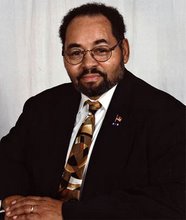
Posted by E. Everett McFall at 10:28 PM

Tuesday, May 6, 2008

1 in 5 Iraq, Afghanistan Vets Suffer PTSD

1 in 5 Iraqi, Afghanistan Vets Suffer PTSD

Published on April 19th, 2008
Posted by Eideard in General

Nearly 20 percent of military service members
who have returned from Iraq and Afghanistan —
300,000 in all — report symptoms of post
traumatic stress disorder or major depression, yet only
slightly more than half have sought treatment, according to a new
RAND Corporation study.

In addition, researchers found about 19 percent of returning
service members report that they experienced a possible
traumatic brain injury while deployed, with
7 percent reporting both a probable
brain injury and current PTSD or major depression.

Many service members said they do not seek treatment for
psychological illnesses because they fear it will harm their
careers. But even among those who do seek help for PTSD
or major depression, only about half receive treatment that
researchers consider “minimally adequate” for their illnesses…

“There is a major health crisis facing those men and
women who have served our nation in Iraq and Afghanistan,”
said Terri Tanielian, the project’s co-leader and a researcher
at RAND, a nonprofit research organization. “Unless they receive
appropriate and effective care for these mental health conditions,
there will be long-term consequences for them and for
the nation. Unfortunately, we found there are many barriers
preventing them from getting the high-quality treatment they
need.”

Another cost of Bush’s War ignored beforehand - and since - by our
grand imperial wizards.

------------------------------------>
The VA has set up a 24-hour suicide hotline round-the-clock
access to mental health professionals.
The number is 1-800-273- 8255 (TALK).
To learn more about PTSD-- visit the
National Center for PTSD website.
------------------------------------>
Flashback, Posttraumatic Stress Disorder, Suicide,
and the Lessons of WAR by Penny Coleman
and--->
I Can Still Hear Thier Cries, Even In My Sleep...
A Journey Into PTSD By E. Everett McFall
Both Books are Available on Amazon.com
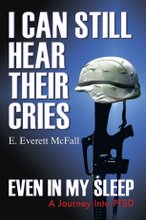
Tuesday, April 22, 2008

VA Confirms 18 Vets Commit Suicide Everyday

Headlined on 4/21/08:

VA Confirms 18 Vets Commit Suicide Everyday!!!


by Jason Leopold Page 1 of 3 page(s)
http://www.opednews.com/

In a stunning admission, top officials at the Veterans
Health Administration confirmed that the agency\'s
own statistics show that an average of 126
veterans per week -6,552 veterans per
year-commit suicide, according to an internal
email distributed to several VA officials.'dated
Dec. 15, 2007.

Brig. Gen. Michael J. Kussman, the undersecretary for
health at the VA, sent the email inquiry about the accuracy
of a news report published that month claiming the suicide
rate among veterans was 18 per day.

“McClatchy [Newspapers] alleges that 18 veterans kill
themselves everyday and this is confirmed by the VA’s
own statistics,” Kussman wrote.

“Is that true? Sounds awful if one is considering 24 million veterans.”

In a stunning admission, top officials at the Veterans
Health Administration confirmed that the agency’s own
statistics show that an average of 126 veterans per week
—6,552 veterans per year—commit suicide, according to
an internal email distributed to several VA officials.

In an email response to Kussman, Ira Katz, the head of
mental health at the VA, confirmed the statistics and added
the “VA’s own data demonstrate 4-5 suicides per
day among those who receive care from us.”

This week, in a federal courthouse in San Francisco, that
email will be cited as evidence that the VA has failed to
properly treat veterans who suffer from PTSD and
veterans who are suicidal.

Those allegations were made in a class-action lawsuit filed
against the VA by two veterans advocacy groups, 'Veterans
for Common Sense' and 'Veterans United for Truth', alleging
a systematic breakdown at the VA has led to an "epidemic
of suicides."

The organizations claim the VA, which has a backlog of 600,000
benefits claims to sort through, is unprepared to deal with
cases of Post Traumatic Stress Disorder among veterans
returning from Iraq and Afghanistan, and has turned away
veterans who have sought help for depression at
VA hospitals.


Some of those veterans later committed suicide, according
to the lawsuit. The groups want a federal judge to issue a
preliminary injunction to force the VA to immediately treat
veterans who show signs of PTSD and are at risk of suicide. ://

------------------------------------>
Our question is: How Many of Those 18 are OEF/OIF Veterans?

Then What is the REAL Death Toll?
------------------------------------>
The VA has set up a 24-hour suicide hotline for
around-the-clock access to mental health professionals.
The number is 1-800-273-TALK (8255).
To learn more about PTSD-- visit the
National Center for PTSD website.
------------------------------------>
I Can Still Hear Thier Cries, Even In My Sleep...A Journey Into PTSD!