Tuesday, May 13, 2008

YES, YOU CAN! Online


YES, YOU CAN! Online

by Speedy - Support Veterans
May 13, 2008 11:26 AM EDT


Popular SCI self-care guide now freely available on the web
Washington, DC-YES, YOU CAN!, Paralyzed Veterans of America's
(Paralyzed Veterans) popular self-care guide for people with spinal
cord injury (SCI), is now accessible online for free.
"Making vital self-help information accessible to millions of people
with disabilities, their families and their caregivers is an important
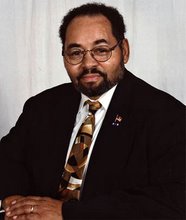
part of Paralyzed Veterans' mission," said Randy L. Pleva, Sr,
National President of Paralyzed Veterans. "Information is power
and Yes, You Can! has helped to empower so many disabled
people by giving them the information they need to help themselves.

Now this essential resource can be accessed by anyone who has a
computer with an Internet connection."
YES, YOU CAN!, A Guide to Self-Care for Persons with Spinal Cord
Injury, is written and edited by experts. This third edition includes
six new chapters on pain, substance abuse, exercise, alternative
medicine, equipment, and staying healthy.

It is the most comprehensive self-care guide for people with SCI,
including newly injured patients in our nation's SCI units and SCI
patients who are out of the hospital. Family members of people with
SCI will also find this a useful resource.
With this online version of YES, YOU CAN!, you'll be able to:
•· Download the book for free
•· Email the book to a friend
•· Take an online tutorial on how to use the book
•· Conduct keyword searches
•· Bookmark any page
•· Print any page
•· Instantly click on dozens of website references
that are all hot-linked
To access YES, YOU CAN! online and to purchase print copies.
please visit http://www.pva.org/.
***************************************************************
Sounds like valiant measures have been taken to ensure betterment
for our paralyzed veterans. I'm so glad to hear this!
Kimberly Ripley, May 13, 2008, 12:05pm EDT

I'm with Kimberly. For years now we haven't done enough for those
who protect us. Any improvement is welcome.
Pamela L., May 13, 2008, 1:13pm EDT

Sometimes "they" attempt to do the right things. Thanks for the info.
Marilyn M., May 13, 2008, 3:19pm EDT
***************************************************************
The VA has set up a 24-hour suicide hotline
round-the-clock access to mental health professionals.
The number is 1-800-273- 8255 (TALK).
To learn more about PTSD-- visit the
------------------------------------>
and the Lessons of WAR by Penny Coleman

...A Journey Into PTSD By E. Everett McFall

Both Books are Available on Amazon.com

Sunday, May 11, 2008

Combating P.T.S.D. and Preventing Suicides

May 10, 2008
By Jennifer Litz Editor


The founders of the new PTSD treatment center in San Angelo,
First Gulf War veteran Steve Olness and paramedic Rosendo
"Rosey" Velez. ( Photo/Sarah Balderas)

Combating P.T.S.D. and Preventing Suicides

One of the most progressive treatment centers for Post Traumatic
Stress Disorders in the country is coming to San Angelo, made
possible by an $80,000 grant from the TRIAD Fund of Permian
Basin Area Foundation. But what’s really special about the new
center at 2607 Johnson Street is not its christening by foundation
funds. The people conducting counseling services there are not your
typical government bureaucratic types. They’re veterans of war,
and even Ground Zero.

Gulf War vet Steve Olness is program manger for veteran’s services
for Mental Health Mental Retardation Services of the Concho Valley.
MHMR will share digs on Johnson Street with Emergency Services
Respite Center to provide care for recently returned soldiers and
other crisis responders suffering from Post Traumatic Stress
Disorder.

“I was in the army in the first Gulf War, and when we came back,
there was nothing like this,” says Olness. “Our war was nothing
like this one, but there was nobody waiting to try to get you used
to civilian life again. Or get you used to peacetime. There wasn’t
anything. We just came back, and a lot of guys who got out of the
military right after that, you got a handshake and goodbye.”
Olness says the soldiers coming back from tours in Iraq and
Afghanistan are going to need lot of help—and so are the military
resources set up to receive them.

“It’s going to be like a tidal wave,” Olness says. “Because some
of these kids are pulling three, four, and five tours over
there. And when you pull an 18-year-old kid fresh out of high
school, send him to training and he goes to a combat area, and
all he knows is what he was taught to do, sometimes that means
he has to take another person’s life. And then he comes back
home, and everyone lauds him as a hero—but he doesn’t feel
like a hero.”

Olness says there’s a stigma to having PTSD. “If a [solider comes
back with] diagnosed PTSD, the military has to pay ‘x’ number
of dollars for the rest of his life,” he says. “It is easier for them
to say, ‘You’re not doing your job; you’re late for formation; I hear
you’ve had problems with your wife . . .’, they take the easy way...
because it’s easier to put him out of the military and give him
limited benefits if any at all.”

Olness says the new program will offer counseling to vets without
the stigma. “If you’re on active duty, you get labeled right away,”
he says. “You don’t want to be the NCO that is in charge of troops
that’s the guy that can’t handle it. He’s done his time in combat, and
now he’s training other troops, and you don’t want to be trained by
a guy who can’t take it.” The program created with TRIAD funds
features counselors and doctors on staff who can see patients and
even prescribe medicine. Many staffers are veterans themselves.

The Problem with the VA

Pat Dugan was a reconnaissance marine corporal in Vietnam for
19 months, starting in 1966. “There’s a big difference between
being a combat person and a non-combat person,” explains Pat
Dugan. “I’m a marine, and I’m proud to be a marine, but I’m
even more proud to be a combat marine.” He’s now a
passionate voice for veteran help that resounds throughout
West Texas. Dugan says the problem with the Department
of Veteran’s Affairs, is that they haven’t delivered on
the promise, such as: the military will take care of you for
your service.

Instead, Dugan, like Olness, paints the picture of a disrespectful,
mainly incompetent VA system. He foresees bad times ahead
for the “kids” currently turning several tours, who will come home
to bureaucratic red tape rather than help from government agencies.


“I am seeing one of the biggest mushroom clouds,” Dugan says of
times ahead for Iraq/Afghanistan veterans. “’Cause I’m thinking,
the public runs around with yellow ribbons on their cars, but what
I don’t see, except with Congressman Ciro Rodriguez (TX-23), is
people realizing that everyone in this war has PTSD. Because there
are no front lines in this war. You can be [in a non-combat service]
and get your butt blown off the road there with anyone else.
Everyone’s sitting around waiting for an explosion to go off, and
they send you back and back for more tours.”

When these vets do come back home—or in between myriad
deployments—they’re still fighting—for their benefits. “In
Del Rio, for example, we’ve got people with problems,”
Dugan says. “And they have to travel 150 miles to get help
[at a VA clinic]. And then when you get up there, I’m not being mean,
but when you go up there and apply to get help, you get some
VA muffin that’s not a veteran, and they put you through mental
gymnastics like you wouldn’t believe. [Vets] don’t want to be
humiliated and go through that process.”

Dugan praises programs like the new MHMR/ESRC building.
He can even name one state agency that does things right—
The Texas Veteran’s Commission, whom he sees as a shining
example for others like it.

“I think the Texas Veteran’s Commission is as fine as any in
the US,” he says. “They treated me with dignity and respect,
talked with me, and took their time with me. They are an
example.” Conversely, Dugan describes nightmarish situations
at Audie Murphy Memorial Veterans Hospital and others.
During one visit, Dugan was chastised loudly for allowing an
80-year-old woman on oxygen to cut ahead of him for treatment.
Another time, Dugan was rebuked for offering his Marine Corps
serial number as identification. “We don’t use those anymore, we
only use social security numbers,” an administrator scoffed. But
Dugan says the Corps had taught him to be proud of his serial
number. Everyone has a social security number; Dugan felt he
earned that serial number.

“I was so pissed off, I came home and gave my Jack Russell
Terrier my serial number, so now he’s 2164539USMC,” Dugan
says. “That was my rebuke to the VA.” But not only do many
vets express their feeling that VA administrators, many of who
have never served, lack respect for veterans, they also lack some
basic “industry” knowledge. “One of my friends had a Navy Cross
—it’s the second highest medal awarded, for an extreme act of
heroism,” Dugan says. He walked into the VA, and the lady asked
him [about a combat action ribbon]. She said they didn’t issue those
until ’71, and he had gotten out of the service in ‘69. So she says,
‘Do you have any proof that you saw combat?’ And he said, ‘I got a
Navy Cross, does that count?’ And she said, [thinking is was akin to
a Blue Cross/Blue Shield policy]
‘Did I ask you about your insurance? I asked you about your
Combat Action Ribbon!’ She didn’t even know what a Navy
Cross was. She thought it was insurance.”
------------------------------------>
The VA has set up a 24-hour suicide hotline
round-the-clockaccess to mental health professionals.
The number is 1-800-273- 8255 (TALK).
To learn more about PTSD-- visit the
National Center for PTSD website.
------------------------------------>
Flashback, Posttraumatic Stress Disorder, Suicide,
and the Lessons of WAR by Penny Coleman
and--->I Can Still Hear Thier Cries, Even In My Sleep...
A Journey Into PTSD By E. Everett McFall
Both Books are Available on Amazon.com
Posted by E. Everett McFall at 10:28 PM

Tuesday, May 6, 2008

1 in 5 Iraq, Afghanistan Vets Suffer PTSD

1 in 5 Iraqi, Afghanistan Vets Suffer PTSD

Published on April 19th, 2008
Posted by Eideard in General

Nearly 20 percent of military service members
who have returned from Iraq and Afghanistan —
300,000 in allreport symptoms of post
traumatic stress disorder or major depression, yet only
slightly more than half have sought treatment, according to a new
RAND Corporation study.

In addition, researchers found about 19 percent of returning
service members report that they experienced a possible
traumatic brain injury while deployed, with
7 percent reporting both a probable
brain injury and current PTSD or major depression.

Many service members said they do not seek treatment for
psychological illnesses because they fear it will harm their
careers. But even among those who do seek help for PTSD
or major depression, only about half receive treatment that
researchers consider “minimally adequate” for their illnesses…

“There is a major health crisis facing those men and
women who have served our nation in Iraq and Afghanistan,”
said Terri Tanielian, the project’s co-leader and a researcher
at RAND, a nonprofit research organization. “Unless they receive
appropriate and effective care for these mental health conditions,
there will be long-term consequences for them and for
the nation. Unfortunately, we found there are many barriers
preventing them from getting the high-quality treatment they
need.”

Another cost of Bush’s War ignored beforehand - and since - by our
grand imperial wizards.

------------------------------------>
The VA has set up a 24-hour suicide hotline round-the-clock
access to mental health professionals.
The number is 1-800-273- 8255 (TALK).
To learn more about PTSD-- visit the
National Center for PTSD website.
------------------------------------>
Flashback, Posttraumatic Stress Disorder, Suicide,
and the Lessons of WAR by Penny Coleman
and--->
I Can Still Hear Thier Cries, Even In My Sleep...
A Journey Into PTSD By E. Everett McFall
Both Books are Available on Amazon.com

Tuesday, April 22, 2008

VA Confirms 18 Vets Commit Suicide Everyday

Headlined on 4/21/08:

VA Confirms 18 Vets Commit Suicide Everyday!!!


by Jason Leopold Page 1 of 3 page(s)
http://www.opednews.com/

In a stunning admission, top officials at the Veterans
Health Administration confirmed that the agency\'s
own statistics show that an average of 126
veterans per week -6,552 veterans per
year-commit suicide, according to an internal
email distributed to several VA officials.'dated
Dec. 15, 2007.

Brig. Gen. Michael J. Kussman, the undersecretary for
health at the VA, sent the email inquiry about the accuracy
of a news report published that month claiming the suicide
rate among veterans was 18 per day.

“McClatchy [Newspapers] alleges that 18 veterans kill
themselves everyday and this is confirmed by the VA’s
own statistics,” Kussman wrote.

“Is that true? Sounds awful if one is considering 24 million veterans.”

In a stunning admission, top officials at the Veterans
Health Administration confirmed that the agency’s own
statistics show that an average of 126 veterans per week
6,552 veterans per year—commit suicide, according to
an internal email distributed to several VA officials.

In an email response to Kussman, Ira Katz, the head of
mental health at the VA, confirmed the statistics and added
the “VA’s own data demonstrate 4-5 suicides per
day among those who receive care from us.”

This week, in a federal courthouse in San Francisco, that
email will be cited as evidence that the VA has failed to
properly treat veterans who suffer from PTSD and
veterans who are suicidal.

Those allegations were made in a class-action lawsuit filed
against the VA by two veterans advocacy groups, 'Veterans
for Common Sense' and 'Veterans United for Truth', alleging
a systematic breakdown at the VA has led to an "epidemic
of suicides."

The organizations claim the VA, which has a backlog of 600,000
benefits claims to sort through, is unprepared to deal with
cases of Post Traumatic Stress Disorder among veterans
returning from Iraq and Afghanistan, and has turned away
veterans who have sought help for depression at
VA hospitals.


Some of those veterans later committed suicide, according
to the lawsuit. The groups want a federal judge to issue a
preliminary injunction to force the VA to immediately treat
veterans who show signs of PTSD and are at risk of suicide. ://

------------------------------------>
Our question is: How Many of Those 18 are OEF/OIF Veterans?

Then What is the REAL Death Toll?
------------------------------------>
The VA has set up a 24-hour suicide hotline for
around-the-clock access to mental health professionals.
The number is 1-800-273-TALK (8255).
To learn more about PTSD-- visit the
National Center for PTSD website.
------------------------------------>
I Can Still Hear Thier Cries, Even In My Sleep...A Journey Into PTSD!

Friday, April 11, 2008

"My LIES Are Only This Big !"

"It Was Just a little Mis-Statement!!!"


NO ---SHE PLAINLY JUST LIED, PERIOD!!!


Associated Press
Apr 11, 5:49 PM (ET)

WASHINGTON (AP) - Former President Clinton has added to
the falsehoods surrounding his wife's tale of her trip to Bosnia.
In Indiana on Thursday, Bill Clinton defended his wife's mistake
in claiming that she landed under sniper fire in Bosnia,
accusing the media of treating her like "she'd robbed a bank"
for confusing the facts.

The New York senator had repeatedly described a harrowing
scene in Tuzla, Bosnia, in which she and her daughter, Chelsea, had
to run for cover from sniper fire as soon as they landed for a visit
in 1996. Video footage of the day instead showed a peaceful
reception in which an 8-year-old girl greeted the first lady.

Hillary Clinton has acknowledged that she got the facts wrong in
retelling the tale. Bill Clinton's inaccuracies don't involve long-ago
memories, but misstatements about how his wife has handled the
story.

"A lot of the way this whole campaign has been covered has
amused me," Bill Clinton said in Boonville, Ind. "But there was a
lot of fulminating because Hillary, one time late at night when she
was exhausted, misstated and immediately apologized for it, what
happened to her in Bosnia in 1995.

"Did y'all see all that? Oh, they blew it up," the former president
continued. "Let me just tell you. The president of Bosnia and
Gen. Wesley Clark - who was there making peace where we'd lost
three peacekeepers who had to ride on a dangerous mountain road
because it was too dangerous to go the regular, safe way - both
defended her because they pointed out that when her plane landed
in Bosnia, she had to go up to the bulletproof part of the plane, in the
front.


Everybody else had to put their flak jackets underneath the seat in
case they got shot at. And everywhere they went they were
covered by Apache helicopters. So they just abbreviated the arrival
ceremony.

"Now I say that because what really has mattered is that even then
she was interested in our troops," he said. "And I think she was the
first first lady since Eleanor Roosevelt to go into a combat
zone. And you would of thought, you know, that she'd robbed a bank
the way they all carried on about this. And some of them when they're
60 they'll forget something when they're tired at 11 o'clock at night, too."

THE TRUE FACTS:
Bill Clinton has many of the facts wrong.
His wife didn't make the sniper fire claim "one time late at night when
she was exhausted." She actually told the story several times,
including during prepared remarks on foreign policy delivered the
morning of March 17.

It's also not true that she "immediately apologized for it." Clinton
has never apologized for the comments and only acknowledged
that she "misspoke" a week after the March 17 speech when video
of her peaceful tarmac reception emerged.

It's also not true that she was the "first first lady since Eleanor
Roosevelt to go into a combat zone" - a claim that Hillary Clinton
has also made when talking about the trip. Pat Nixon traveled to
Saigon during the Vietnam War and Barbara Bush went to
Saudi Arabia two months before the launching of Desert Storm.

Clinton campaign spokesman Phil Singer responded to the former
president's remarks Friday by saying, "Senator Clinton appreciates
her husband standing up for her, but this was her mistake and she
takes responsibility for it."
---------------------------------------------------->
Most VETERANS are appalled at this Blatant Two Faced
MISSTATEMENT By a potential Commander-In Chief.
It is Disrespectful to those who were there as well All of The
American Public.
The Video's clearly show women and children calmly waiting for
her to deplane for the "ceremony", while clusters of Armed
Military Personnel behind those civilians.
Why Doesn't She Just Admit That She LIED???

Special thanks to Sgt TerryHunt7USMC@aol.com

Thursday, April 10, 2008

Google News Alert for: POST WAR SUICIDE

America's Soldiers Need Support on the War FrontNatural News.com -
Phoenix, AZ, USAOver 27% of soldiers on their 3rd or 4th tours were
suffering anxiety, depression, post-combat stress, or other
difficulties. Compare this percentage with ...See all stories on this topic

Army Under Stress From Long WarsThe Associated Press - The Defense
Department has asked for $46.5 billion in this year's war budget to repair
and replace equipment damaged or destroyed in Iraq and Afghanistan.
...See all stories on this topic

Helping Veterans Suffering from PTSDBy Tom Allen 2008 The bill
will improve diagnosis, compensation, and treatment for veterans
suffering from PTSD. By requiring that Veterans Administration
employees take sufficient time to diagnose and accurately rate the
severity of the disorder, ...- http://www.turnmaineblue.com

Deployed for Third Time with Both PTSD and TBI, A Fort Carson ...By contact@veteransforcommonsense.org (Erin Emery )
Army Staff Sergeant Chad Barrett had been sent from Fort Carson on
a third tour of duty in Iraq despite a brain injury and stress disorder.
Veterans for Common Sense - http://www.veteransforcommonsense.org

PTSD Compromises Battered Women's Future SafetyBy Perez, S., Johnson,
D. M. Using the Chicago Women's Health Risk Study, a naturalistic
longitudinal study of 320 abused women, the current study examined the
impact of posttraumatic stress disorder (PTSD) and depression on battered
women's safety at follow-up.
...Journal of Interpersonal Violence... - http://jiv.sagepub.com

Do You Sleep With Alot of Covers?By linasmom Curious - does anyone
else sleep with tons of covers on their bed no matter the temperature
outside? I have a theory that I love tons of covers because they allow me
to feel like a little child wrapped tightly in a blanket,
...PTSD Forum - http://www.ptsdforum.org

DEPLOYED FOR THIRD TIME WITH BOTH PTSD AND TBI,
A FORT CARSON ...Shelby Barrett said that an agent with the
Army's Criminal Investigation Division told her that two empty prescription-
pill bottles were found next to her husband's body Feb. 2 in Mosul.
Barrett said investigators also found a letter in
...0DayNews.org - Breaking News Headlines - http://0daynews.org/

An Old Man With PTSDBy Gaius Sempronius Gracchus, Last night on
Race for the White House (or whatever it’s called) at the very end a
black woman journalist I’ve never seen before speculated McCain is
hiding his medical records because he has PTSD from his days being
tortured in Vietnam.
...Undemocracy in America - http://undemocracy.blogspot.com/

Thursday, March 20, 2008

THE SILENT RANK and RECIPE OF A MILITARY WIFE

From yesterday's issue of "Buffalo Chips", a daily NewsLetter
by Bill Brabant.


From The Collection of Sonny Gutin, wb2dxb

THE SILENT RANK :-Author Unknown

I wear no uniforms, no blues or army greens.
But I am in the military in the ranks rarely seen.
I have no rank upon my shoulders. Salutes I do not give.
But the military world is the place where I live.

I'm not in the chain of command, orders I do not get.
But my husband is the one who does, this I can not forget.

I'm not the one who fires the weapon, who puts my life on the line.
But my job is just as tough. I'm the one that's left behind.

My husband is a patriot, a brave and prideful man,
and the call to serve his country not all can understand.

Behind the lines I see the things needed to keep this country free.
My husband makes the sacrifice, but so do our kids and me.

I love the man I married. Soldiering is his life.
But I stand among the silent ranks known as the Military Wife.

-----> From The Collection of Sonny Gutin, wb2dxb

----------------------------------------->
RECIPE OF A MILITARY WIFE
1 1/2 CUPS PATIENCE
1 LB COURAGE
3/4 TOLERANCE
A DASH OF ADVENTURE
With the above ingredients add two teaspoons of elbow grease.
Let it set alone for one year.
Marinate frequently with salty tears.
Pour off excess fat.
Sprinkle ever so lightly with money.
Knead dough until payday.
Season with international spices
Bake 20 years or until done, and serve with pride.

Buffalo said they checked and couldn't find an author on the net for
either of these, although they wouldn't be surprised if Mary Greeley
did the first one, as her husband was one of the survivors of the
attack on the USS Cole.

Our profound thanks and appreciation to Marnie Mowles, the proud
wife of a US Marine Corps Vietnam Veteran - Semper Fi !

Monday, March 10, 2008

MEDIC, 2nd Woman to be Awarded Silver Star

The Price of Freedom is Priceless!


A Medic Stationed in Afghanistan Becomes
2nd Woman to be Awarded Silver Star
FOXNEWS.com
Sunday , March 09, 2008
CAMP SALERNO, Afghanistan

A 19-year-old medic from Texas will become the first woman in
Afghanistan and only the second female soldier since World War II
to receive the Silver Star, the nation's third-highest medal for valor.

Army Spc. Monica Lin Brown saved the lives of fellow soldiers after
a roadside bomb tore through a convoy of Humvees in the eastern
Paktia province in April 2007, the military said.

After the explosion, which wounded five soldiers in her unit, Brown
ran through insurgent gunfire and used her body to shield
wounded comrades as mortars fell less than 100 yards away, the
military said.

"I did not really think about anything except for getting the guys
to a safer location and getting them taken care of and getting them
out of there," Brown told The Associated Press on Saturday at a
U.S. base in the eastern province of Khost.

Brown, of Lake Jackson, Texas, is scheduled to receive the
Silver Star later this month. She was part of a four-vehicle convoy
patrolling near Jani Kheil in the eastern province of Paktia on April
25, 2007, when a bomb struck one of the Humvees.

"We stopped the convoy. I opened up my door and grabbed my
aid bag," Brown said. She started running toward the burning
vehicle as insurgents opened fire. All five wounded soldiers had
scrambled out. "I assessed the patients to see how bad they
were. We tried to move them to a safer location because we were
still receiving incoming fire," Brown said.

Pentagon policy prohibits women from serving in front-line combat
roles in the infantry, armor or artillery, for example. But the nature
of the wars in Afghanistan and Iraq, with no real front lines, has
seen women soldiers take part in close-quarters combat more
than previous conflicts.

Four Army nurses in World War II were the first women to receive
the Silver Star, though three nurses serving in World War I were
awarded the medal posthumously last year, according to the Army's
Web site.

Brown, of the 4th Squadron, 73rd Cavalry Regiment, 4th Brigade
Combat Team, said ammunition going off inside the burning
Humvee was sending shrapnel in all directions. She said they were
sitting in a dangerous spot.

"So we dragged them for 100 or 200 meters, got them away from
the Humvee a little bit," she said. "I was in a kind of a robot-mode,
did not think about much but getting the guys taken care of."

For Brown, who knew all five wounded soldiers, it became a race to
get them all to a safer location. Eventually, they moved the
wounded some 500 yards away and treated them on site before
putting them on a helicopter for evacuation.

"I did not really have time to be scared," Brown said. "Running
back to the vehicle, I was nervous (since) I did not know how badly
the guys were injured. That was scary."
------------------------------------>
The VA has set up a 24-hour suicide hotline for
around-the-clock access to mental health professionals.
The number is 1-800-273-TALK.
To learn more about PTSD-- visit the
------------------------------------>

and the Lessons of WAR-- by Penny Coleman __and--->

...A Journey Into PTSD-- By E. Everett McFall
Both Books are Available on Amazon.com

Halliburton Water Sickens Troops

by Dave McGill
March 09, 2008

According to an Associated Press Report today, "dozens of troops
in Iraq fell sick
" at bases using water supplied by a company that
was, at the time, a subsidiary of Halliburton.


The report went on to say that the soldiers "experienced skin
abscesses, cellulitis, skin infections, diarrhea and other

illnesses." The water, described as being "discolored and smelly,"
was being used for personal hygiene and laundry at three sites run
by the Halliburton subsidiary KBR Inc.

Over two years ago, on January 22, 2006, the Boston Globe re-
ported that troops were being provided with water by Halliburton
that had approximately twice the contamination level of untreated
water from the Euphrates River. Raw sewage is pumped into
the Euphrates.

The Globe article said that employees of Halliburton had been
unable to get the company to inform the people living on the bases
of the problem, as revealed by interviews and internal company
documents.

In considering the overall extent to which Halliburton and its
subsidiaries have allegedly cheated the U.S. government and,
essentially, our troops in Iraq, the words of Elizabeth Barrett
Browning come to mind - "Let me count the ways."

Over three years ago, Rep. Henry A. Waxman (D-CA), counted
the ways. The then ranking minority member on the House
Committee on Government Reform released a bulletin notifying
his constituency that government auditors had issued at least nine
reports criticizing Halliburton's Iraq work and that there were
multiple criminal investigations ongoing into overcharging and
kickbacks involving the company's contracts.

Furthermore, while some Halliburton and government employees
attempted to draw attention to the problems, and were
subsequently punished for their good intentions, others, who
committed serious crimes, were apparently protected. Three months
ago, Rep. Ted Poe (R-TX) said that in addition to the case of Jamie
Lee Jones, who was allegedly gang-raped by her fellow Halliburton
employees, three other women had come forward to claim they were
also sexually assaulted in Iraq while working for Halliburton's then
subsidiary, KBR.

Senator Bill Nelson (D-Fla.) was also so incensed he sent a letter to
the Justice Dept. concerning the alleged rapes. One of the matters
that upset him was that the Jones evidence, in the form of the initial
rape examination kit, had been given to the victim's employer by the
military doctors and that, as a result, nothing had been done to
prosecute those involved, despite the fact that two years had gone by.

Halliburton's luster was further tarnished by accusations that it has
avoided paying its fair share of taxes and also, that it was actually
moving out of the country - yes, this country - the U.S.A.
Last Thursday, the Boston Globe reported that KBR, Halliburton's
subsidiary until less than a year ago, had avoided paying hundreds
of millions of dollars in federal, Medicare and Social Security taxes
by hiring workers through purely shell companies that occupied
nothing more than post office boxes in the Cayman Islands.

And on 3/12/07, CBS News reported that Halliburton was "shifting
its corporate headquarters and chief executive from Houston to
Dubai," an oil-rich emirate in the eastern Arabian Peninsula.

Halliburton is, of course, the company that Dick Cheney headed
before becoming vice president. Over the past five years
Halliburton's common stock has increased by over 300%.
According to Cheney's previous disclosure forms, he owned
100,000 Halliburton options, worth around $4 million, that
expired at the end of last year and that were presumably
exercised. He also owned over 333,000 options, worth about
$12.6 million, that have yet to expire. He has pledged to donate
the options to charities of his choice but the Congressional
Research Service (CRS) has concluded that even by making such
donations he could realize a substantial windfall. CRS has ruled
that these options do represent a "financial interest," as well as
the deferred payments of approximately $200,000 that the vice
president receives each year from Halliburton.

Of his relationship with Halliburton, CBS News reported way back
on September 26, 2003 that Cheney had said on NBC "I've severed
all my ties with the company, gotten rid of all my financial interest.
I have no financial interest in Halliburton of any kind and haven't
had, now, for over three years."

A few months later, Kevin Kellems, a spokesman for Cheney, also
announced "Vice President Cheney and his office have had no
involvement whatsoever in government contracting matters since
he left private business to run for vice president."

However, Time magazine, in May of 2004, reported that a
Pentagon e-mail it had uncovered said Cheney's office
"coordinated" a multi-billion dollar Iraq reconstruction
contract awarded to Halliburton.

It is the contention of this column that the mismanagement of
monies and responsibilities in Iraq, and the potential conflicts
of interest therein, have served as a detriment to the conduct of
the war and have had a negative impact on the troops and their
ability to function effectively and safely.
-------------------------------------->
The good news, at least for now, however, is that deaths among
our forces in Iraq have dropped to a very low level.

Last week the Department of Defense released the obituary of
one 24-year-old Air Force Sgt. killed in Iraq when his helicopter
crashed in a sandstorm north of Baghdad.

According to the web site http://www.icasualties.org/
, total U.S. deaths in Iraq now stand at 3,975, including
one whose family is being notified today.

The Department of Defense also released the obituaries of two
paratroopers, ages 22 and 23, killed in Afghanistan when an
improvised explosive device detonated near them outside a
government building southeast of Kabul.

Total U.S. deaths in Afghanistan were 416 as of March 1,
according to the Pentagon.

Sunday, March 9, 2008

Post Traumatic Stress Hits Army Unit Hard

Alpha Company hit hard by post-traumatic stress disorder.
In all, 46 percent said they had been treated at clinics or hospitals.

“Those are big numbers,” one expert said.


By Tom Infield
INQUIRER STAFF WRITER


The Alpha Company humvee is
destroyed on Smugglers Road.

Four guardsmen were killed and
the driver was thrown from the vehicle.


Of all the things that Alpha Company has had to struggle with
since it came home from Iraq, the most pervasive may be
post-traumatic stress disorder, or PTSD.

Of the 126 veterans interviewed or surveyed by The Inquirer,
almost half- 46 percent - said they had been treated for PTSD,
most at VA hospitals and clinics in the region.

Alpha's rate of PTSD is higher than that of most U.S. troops who
served in Iraq or Afghanistan - partly, no doubt, as a result of its
being a frontline combat unit that lost six men.

Shelley M. MacDermid, a Purdue University professor who served
on a Defense Department mental-health task force last year, said
typical PTSD rates among returning veterans were about
14 percent.

HOWEVER...
"Those are big numbers," she said of The Inquirer's Alpha
findings. National Guard and Reserve units, in general, have
shown slightly higher PTSD rates than have regular Army units,
she said.

The Defense Department task force said this might be in part
because civilian-soldiers were separated after they returned home,
rather than staying together as units in which the members could
support one another.

Ira Katz, director of mental-health services for the Department of
Veterans Affairs, said that among the 300,000 or so veterans who
have been seen by the VA, about 20 percent have been diagnosed
with PTSD.

But he said that twice that number - about 40 percent - have had
some form of "mental condition." "That's not all that different from
your [46] percent," he said. Both MacDermid and Katz said that
PTSD had become a popular shorthand for all sorts of emotional
symptoms that veterans experience.

These may include depression and anxiety disorders, but not
rise to the level of PTSD.

Steven Silver, who recently retired as director of the inpatient PTSD
unit at the Coatesville VA hospital, predicted that as time went on,
more and more combat veterans would be shown to have the high
PTSD rate that the National Guard Company Alpha now shows.

PTSD, as a term, has been used only since 1980.
(An after study of Vietnam Veteran's). World War II soldiers talked
of battle fatigue. In World War I, it was shell shock.

Silver said that both the military and the VA had become more
aggressive in warning troops about PTSD and getting them
treatment. He said that although "Alpha's" rate was high, "in some
ways, it's good news. It means that people are coming in for
help."

PTSD typically is treated with psychotherapy and
antidepressant drugs, including Zoloft and Paxil, Sertraline
and or Bupropion. About two-thirds of Alpha veterans have received
care at VA hospitals and clinics - for PTSD, physical ailments, or both.

Of those who expressed an opinion, 57 said they were satisfied with
VA care and 19 said they were not.

Contact staff writer Tom Infield at 610-313-8205 or tinfield@phillynews.com.
------------------------------------>
The VA has set up a 24-hour suicide hotline for
round-the-clock access to mental health professionals.
The number is 1-800-273-TALK.
To learn more about PTSD-- visit the National Center for PTSD website.
------------------------------------>
Private Battle, Part 1
Private Battle, Part 2
Flashback, Posttraumatic Stress Disorder, Suicide,
and the Lessons of WAR by Penny Coleman and--->

I Can Still Hear Thier Cries, Even In My Sleep...
A Journey Into PTSD By E. Everett McFall
Both Books are Available on Amazon.com